Safeguarding
Bentley West Primary School is committed to safeguarding and promoting the well-being of all children, and expects our staff and volunteers to share this commitment.
Safeguarding Team
Designated Safeguarding Lead and Single Point of Contact - Mr Molloy
Deputy Designated Safeguarding Lead - Miss Stanley
Deputy Designated Safeguarding Lead and SENDCo - Mrs Evans
Deputy Designated Safeguarding Lead - Miss Baxter
Deputy Designated Safeguarding Lead and Attendance Lead - Mrs Durham
Deputy Designated Safeguarding Lead and Family Support Worker - Mrs Benion
Deputy Designated Safeguarding Lead and Learning Mentor - Mr Al-Naqib
Designated Safeguarding Lead
Mr L Molloy
Lead DSL
Please contact him, via the school office, if you have any safeguarding or child protection concerns.
The safety of our students and staff is our Number 1 priority. We have 7 leaders with specific training to help you and to keep you safe inside and outside of the school.
If you have a concern about your safety or the safety of another student, please speak to any of these members of staff at any time.
NOTICE - CHECK - SHARE
Safeguarding children means taking action to promote the welfare of children and to protect them from harm. Safeguarding is everyone's responsibility. Safeguarding includes:
- Providing help and support to meet the needs of children as soon as problems emerge.
- protecting children from maltreatment, whether that is within or outside the home, including online.
- preventing the impairment of children’s mental and physical health or development.
- ensuring that children grow up in circumstances consistent with the provision of safe and effective care.
- taking action to enable all children to have the best outcomes.
Child Protection is a term that outlines the legal process once a child has been deemed to require social care intervention.
Are you a Parent or Guardian? Protecting children is your responsibility too...
Worried about a child?
If you are concerned about a child in Walsall or need some advice about Early Help you can contact MASH:
-
during office hours (Monday – Thursday, 8.45am – 5.15pm Friday, 8.45am – 4.45pm) by calling the Multi-Agency Safeguarding Hub on 0300 555 2866.
-
out of office hours (evenings, weekends and bank holidays) by calling the Emergency Response Team on 0300 555 2922.
In an emergency where a child's safety is at immediate risk of significant harm, call 999.
Prevent Single Point of Contact (SPOC)
Our Prevent Single Point of Contact (SPOC) is the Deputy Head Teacher Mr L Molloy. Please refer to the full Safeguarding Policy for further details.
Safeguarding Documents
Visit our policies page for more information
Operation Encompass
 Bentley West Primary School will be taking part in a joint operation involving Walsall City Council and West Midlands Police. This will formally be known as Operation Encompass
Operation Encompass has been established to help schools provide in-school support to children who have been present at, exposed to or involved in any domestic abuse incident.
We know that children can be significantly harmed, physically and/or emotionally, during these situations, and that it also negatively affects their learning and behaviour in class.
Therefore, as part of the Operation Encompass procedure, and to help mitigate the resulting negative impact, the school will now receive a confidential phone call or email from West Midlands Police before 9am the morning after a child or young person has been witness to, or involved in, any reported domestic abuse incident.
Here at Bentley West Primary School, we have a dedicated and child-focussed Safeguarding Team. They are specially trained to effectively use the information the Police share, in confidence, and enable the school to provide the right support to any child and their family.
We always endeavour to offer the best support possible to our pupils and believe this will be extremely beneficial for all those involved.
More information can be found at https://www.operationencompass.org/
However, if you have any concerns or questions regarding Operation Encompass, please don’t hesitate to contact one of our school’s Designated Safeguarding Leads.
Domestic Abuse
Domestic Abuse
Does your partner, ex-partner or someone you live with:
-
cut you off from family and friends and intentionally isolate you?
-
bully, threaten, or control you?
-
take control of your finances?
-
monitor or limit your use of technology?
-
physically and/or sexually abuse you?
Domestic abuse is not always physical violence. It can also include:
-
coercive control and ‘gaslighting’.
-
economic abuse.
-
online abuse.
-
threats and intimidation.
-
emotional abuse.
-
sexual abuse.
Anyone can be a victim of domestic abuse, regardless of gender, age, ethnicity, religion, socio-economic status, sexuality or background.
If you believe that you are a victim of domestic abuse, there are signs that you can look out for including:
-
being withdrawn, or being isolated from your family and friends.
-
having bruises, burns or bite marks on you.
-
having your finances controlled, or not being given enough to buy food, medication or pay bills.
-
not being allowed to leave your house, or stopped from going to college or work.
-
having your internet or social media use monitored, or someone else reading your texts, emails or letters.
-
being repeatedly belittled, put down or told you are worthless.
-
being pressured into sex or sexual contact.
-
being told that abuse is your fault, or that you’re overreacting.
All forms of domestic abuse are not acceptable in any situation.
Domestic abuse has a major impact upon the health, well-being and education of children and young people. If you’re experiencing domestic abuse and feel frightened of, or controlled by, a partner, an ex-partner or family member, it’s important to remember that it’s not your fault and there is no shame in seeking help.
Services that can support you:
Black Country Women’s Aid
Black Country Women's Aid can be contacted on 0121 553 0090 or https://blackcountrywomensaid.co.uk/
Rights of Women Legal Advice Line
Free confidential legal advice on family law, divorce and relationship breakdown, children and contact issues, domestic violence, sexual violence, discrimination and lesbian parenting can be sought by calling 02072516577 or you can visit www.rightsofwomen.org.uk
National Domestic Abuse Helpline
The 24 hour free helpline can be accessed by calling 0808 2000 247 or you can visit www.womensaid.org.uk/
M.A.L.E: Men's Advice Line & Enquiries
A confidential helpline for male victims of domestic abuse can be accessed by calling 0808 8010327 or you can visit www.mensadviceline.org.uk
FGM (Female Genital Mutilation)
Female genital mutilation (FGM) also known as female circumcision or cutting, is a collective term for procedures which include the partial or total removal of the external female genital organs, or injury to the female genital organs, for cultural or other non-therapeutic reasons.
FGM is medically unnecessary, is extremely painful, and has serious health consequences, both at the time of the procedure, and in later life. It can also be psychologically damaging.
A number of girls die as a direct result of the procedure, from blood loss or infection. In the longer term, women who have undergone some form of FGM are twice as likely to die in childbirth, and four times more likely to give birth to a still born child.
The Female Genital Mutilation Act 2003 makes it
- illegal to practice FGM in the UK
- illegal to assist a girl to mutilate her own genitalia
- illegal to take girls who are British Nationals or permanent residents of the UK abroad for FGM whether or not it is lawful in that country;
- illegal to aid, abet, counsel or procure the carrying out of FGM abroad;
An offence under this act has a maximum penalty of up to 14 years in prison and/or a fine.
The 2003 Act has been amended by the Serious Crime Act 2015, which adds new sections 3A, 4A, 5A, 5B and 5C. These new provisions –
- Introduce mandatory notification - a health care professional or teacher must make a “FGM Notification” to the police if, in the course of their duties, they discover that an act of FGM appears to have been carried out on a girl under 18.
- Create an offence of failing to protect a girl under the age of 16 from FGM (the offence is committed by a person who has parental responsibility for her or has assumed responsibility for her care);
- Introduce Female Genital Mutilation Protection Orders, which may include such provisions, restrictions or requirements as the court considers appropriate in order to protect a girl from FGM; or to protect a girl after FGM has been carried out; and
- Give the victims of FGM a right of anonymity.
Female genital mutilation is physical abuse, and whilst it is perceived by parents not to be an act of hate, it is harmful, it is child abuse and it is unlawful. It has long lasting significant implications for those who have the procedure performed on them.
Five signs to look out for (particularly for organisations such as health and education)
1. The family belongs to a community which practices FGM
2. The family are making plans to go on holiday / requested extended leave from school
3. The child talks about a forthcoming special celebration
4. The child / woman may have difficulty walking or sitting
5. Their own mother or other siblings have had FGM
FGM
Call the Police on 101 if you have information about FGM or believe a child may be at risk. In an emergency, dial 999. Alternatively, contact Crimestoppers anonymously on 0800 555 111 or the NSPCC's FGM Helpline on 0800 028 3550
Useful Links and Resources
Run, Hide, Tell: Terrorism Advice for Young People
Child Accident Prevention Trust
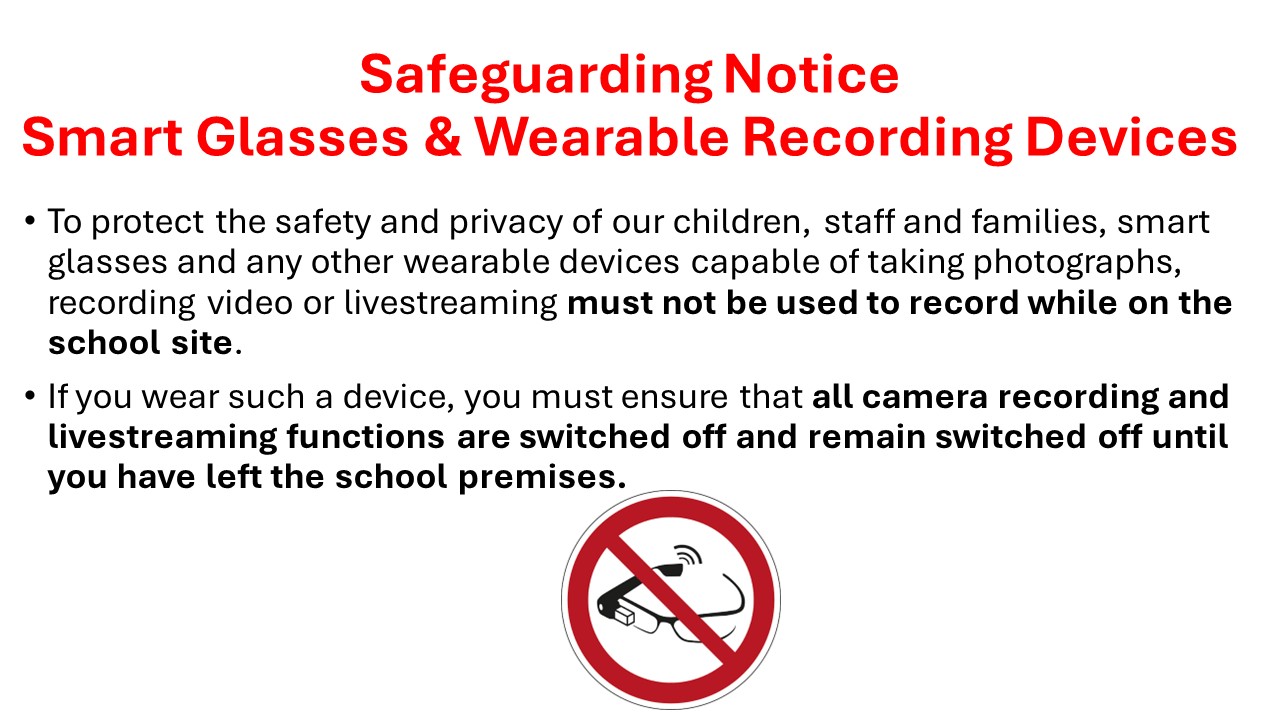
Safeguarding Notice